What is Your True Currency?
Updated: Aug 31
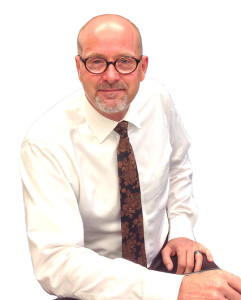
Matt Clements, Managing PrincipalClements Investment Management, 2026

A conversation with Matt Clements about money, fear, risk—and what a portfolio is actually meant to serve.
"A portfolio can be measured to the penny. The life it is meant to serve cannot.
One of the questions I often ask people is:
What is your True Currency?
It usually stops the conversation for a moment. That is partly the point."
Q: What do you mean by “True Currency”?
I believe there are two motivations in the world: love and fear.
When someone becomes focused on their rate of return to the exclusion of everything else, very often fear has taken over. By asking someone to find their True Currency, I am trying to shift the focus away from the portfolio and toward what the portfolio is meant to serve.
Before I can intelligently manage someone’s money, I want to know: What do they love? Where do they want to be in the years ahead? Who do they take care of? What kind of life do they aspire to?
Those answers matter to me before we ever get very far into the numbers. Because the portfolio is not the life. It is there to support the life.
Q: Does that really change how you invest?
Very much. I see two things happen around money all the time.
Some people are afraid to spend it, and as a result they live a much smaller life than they could. Others have no real idea how much they can safely spend, and that uncertainty creates its own kind of anxiety.
I also meet people who may only need a relatively modest return to accomplish everything they want, yet they are invested in a portfolio taking considerably more risk. Why? If you only need a certain level of return to live the life you want, taking substantially more risk simply because you can does not necessarily make sense.
How much risk is appropriate is very personal for every client.
When I build a portfolio I am looking at the person’s age and stage of life, their short- and long-term liquidity needs, and their ability to handle market fluctuations on a number of different levels.
Two people can have the same amount of money and need very different portfolios. Because they have very different lives.
Q: What happens when someone comes to you frightened?
This is often where the real work begins.
A husband has died. Someone has inherited money they have never had to manage before. Retirement is suddenly close. A child needs help. There is a large purchase or a major decision to make.
In those moments, the financial question is almost always sitting inside a much larger human question.
My responsibility is to already have some sense and feeling for those larger questions. That understanding is part of building the portfolio and part of building the relationship.
If a newly widowed woman sat down with me frightened because she suddenly had several million dollars, accounts she did not completely understand and decisions she had never had to make, I would probably start in exactly the same place:
What is your True Currency?
It opens the door to a different part of the conversation. It begins to move the focus from fear toward what she loves and toward the life ahead. And from there, we just talk.
Of course there may eventually be a trust to look at, insurance, investments, income needs, estate questions and a myriad of other subjects. But we need to come to those things organically.
You can’t do that by reading down a list.
Q: You describe being a fiduciary as something more than a regulatory responsibility. What does it mean to you?
It’s a sacred trust.
Someone may be placing in my care resources that represent decades of work, a family business or ranch, an inheritance, or the financial life they built over many years with a spouse. That means something to me.
Supporting a person’s life and legacy—and helping make certain that they can continue living their dreams through their entire life—is, to me, the most important part of being a financial steward.
That is also why I have never been comfortable seeing someone simply as the owner of a portfolio. I want to understand the whole person.
It is the human-to-human connection that allows me to go deeply enough to understand what is truly important and then build the financial life around that.
Someone once asked me what all the years of ranching, sailing, construction, raising a family and working with people taught me that I could not have learned from a degree.
My answer was:
Empathy.
Q: What should someone look for when choosing an advisor?
All advisors will come across as credible. I think the better question is:
How are they different?
Are they willing and able to meet you on a deeper human level? Do they really understand your fears and concerns? Do they understand what your money is supposed to make possible in your life?
Do you feel free to tell them the truth?
And perhaps most important: how do you feel after you have been with them?
You should feel more comfortable and more settled after meeting with a prospective advisor. If you don’t, go somewhere else.
And sometimes the right answer is not to change advisors at all.
If someone comes to me and already has a long-term relationship with an advisor, feels comfortable, and is being well cared for, I think it can be a mistake to change simply for the sake of changing.
We are not about just building a client base. There are many times when no move is necessary. The purpose is to support the whole person.
And that brings me back to the first question:
What is your True Currency?
"Because ultimately the most important question is not simply, How much do I have?
It is:
What is all of this here to serve?
Your portfolio isn’t your True Currency.
It is there to serve it."